
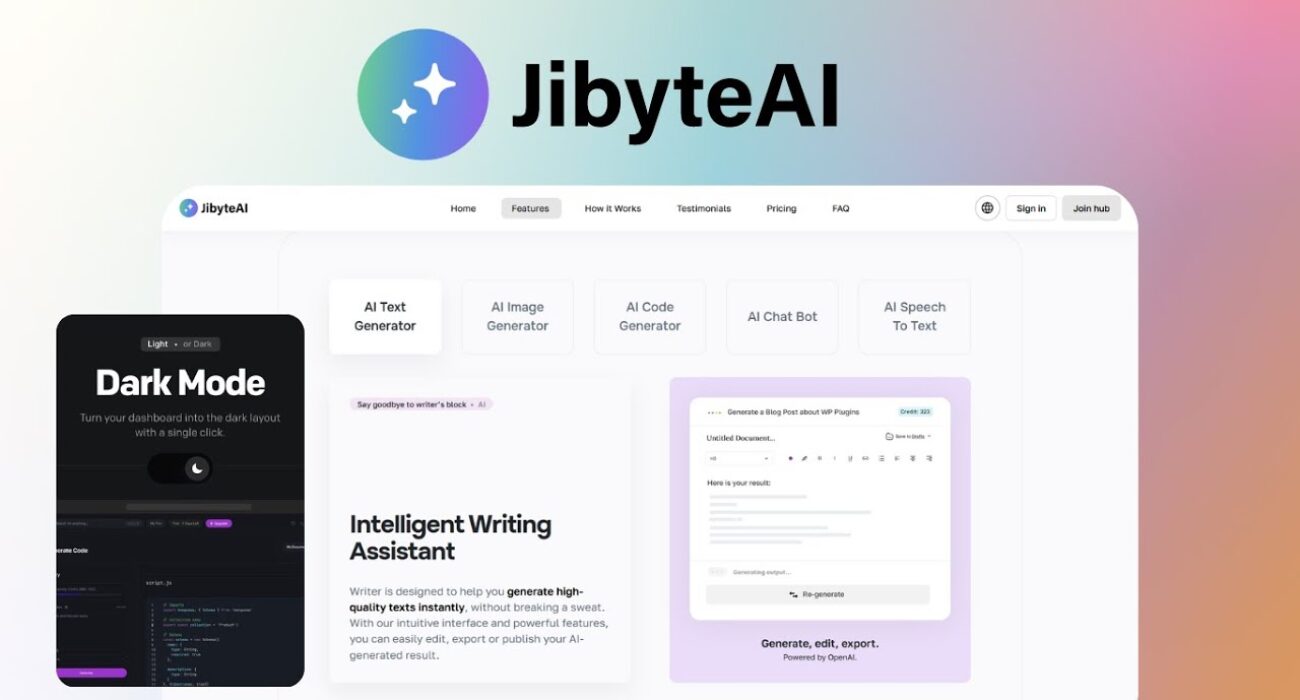
The generative AI market is packed with point solutions. If you want copy, you subscribe to one app. If you need a programming assistant or an image generator, you open two more tabs and double your monthly software spend.
Jibyte AI tackles this exact fragmentation.
Instead of forcing digital agencies, freelancers, and cross-functional developers to bounce between distinct platforms, Jibyte AI packages natural language processing, visual generation, and automated code refactoring into a singular, streamlined workspace. This guide provides an expert-level breakdown of Jibyte AI’s architecture, its core processing models, native pricing tiers, and how it holds up under real-world production stress.
1. Core Architecture and NLP Capabilities
At its foundation, Jibyte AI operates as an intelligent workspace orchestrator. Rather than training heavy foundational LLMs from scratch, the platform builds custom workflows and specialized prompt templates on top of top-tier consumer models (including OpenAI’s GPT-4 architecture).
[User Input / Prompt] —> [Jibyte Template System]
|
v
[Orchestration Dashboard]
/ | \
v v v
[Text Generation] [AI Code] [Image Design]
| | |
v v v
(GPT-4 Engine) (Refactor Core) (Diffusion API)
The system’s standout text capabilities include:
- Context-Aware Ideation: Bypasses basic auto-complete mechanics to offer structural content blueprints based on specific search intent.
- Semantic Adjustments: Built-in tone and localized idiom modifiers that allow copywriters to instantly adapt short-form marketing text for different regional audiences.
- Multilingual Frameworks: Native multi-language processing, enabling cross-border teams to generate and localize copy concurrently within a unified dashboard view.
2. Advanced Features: Going Beyond Basic Text
While simple text interfaces are common, Jibyte AI differentiates itself by adding secondary production layers specifically designed for technical and visual teams.
The Jibyte AI Code Generator
For developers and engineering leads, the native code tool converts natural language descriptions into clean, ready-to-use code blocks across multiple programming frameworks (like React, Python, and Django). In addition to generation, it also has a dedicated automated refactoring engine. If you already have some code, the system checks it for redundancies in logic, structural inefficiencies, and readability, but doesn’t alter the behavior of your application on the outside.
Multi-Model Image Generation
The platform features an integrated design module that translates complex visual prompts into distinct graphical assets. Marketing teams can quickly generate social media collateral, concept art and UI placeholders right in the flow of their copywriting process, minimizing the need for external design queues.
Project Tracking & Analytics
To support expanding teams, the interface includes centralized analytics, a master dashboard for tracking prompt usage tokens, and a built-in support ticket management pipeline to streamline collaborative agency projects.
3. Plan Structures and Token Allotments
Jibyte AI is built on a clear, tiered subscription model tailored to different operational scales. The specific allotments across the platform’s three main tiers are broken down below:
| Feature / Metric | Standard Plan | Pro Plan | Premium Plan |
| Monthly Cost | $5.99 / mo | $10.99 / mo | $30.99 / mo |
| Core AI Model | ChatGPT 3.5 Legacy | ChatGPT 4.0 Core | ChatGPT 4.0 Core |
| Word Token Limit | 10,000 words | 25,000 words | 100,000 words |
| Image Asset Limit | 20 images | 250 images | 1,000 images |
| Template Access | 50 Standard Templates | 50 Premium Templates | 50 Premium Templates |
| Advanced Tools | Basic Support Only | Basic Support Only | AI Code Engine & VIP Support |
4. Real-World Trade-Offs: The Pros and Cons
Every multi-tool platform makes distinct operational sacrifices to keep its workspace unified. Before migrating your team’s workflow to Jibyte AI, consider these production realities:
The Pros
- Drastic Context-Switching Reduction: Managing copy, design drafts, and initial code blocks inside one tab saves significant engineering and creative time.
- Aggressive Pricing Structure: At $10.99 for a Pro plan featuring GPT-4 capabilities, the financial entry point is significantly lower than maintaining separate enterprise AI subscriptions.
- Overcoming Creative Bottlenecks: The template system effectively eliminates cold-start problems for copywriters and social media managers.
The Cons
- Complex Task Performance Ceilings: The code refactoring engine works well with simple scripts and on common frameworks, but can return syntax errors or logic bugs when taking very complex and deeply nested enterprise architectures.
- Cloud Dependencies: The platform has to be running on a stable, fast Internet connection; it is not possible to run local, offline NPU compute tasks.
- Support Response Delays: Mid-tier users have reported some lag in customer support and customer refund process during managing variable workspace accounts.
Frequently Asked Questions
Is Jibyte AI suitable for large-scale software engineering projects?
Jibyte AI excels at speedy prototyping, producing boilerplate, and refactoring singular components or scripts. Developers should use it as an auxiliary tool, though, for enterprise-grade deployments of software, particularly massive ones.
What happens if I exhaust my monthly word or image tokens?
Once a tier’s token caps are reached, the platform prompts you to either wait for your billing cycle to refresh or upgrade to the next operational tier (such as migrating from Pro to Premium to unlock the advanced AI Code modules).
How does Jibyte AI safeguard user data?
The platform uses secure, encrypted cloud connections to pass prompt inputs to its underlying models. However, because it relies on web-hosted infrastructure rather than local, on-device compute setups, enterprise teams should always avoid pasting highly proprietary or unreleased source code into web-based fields.