
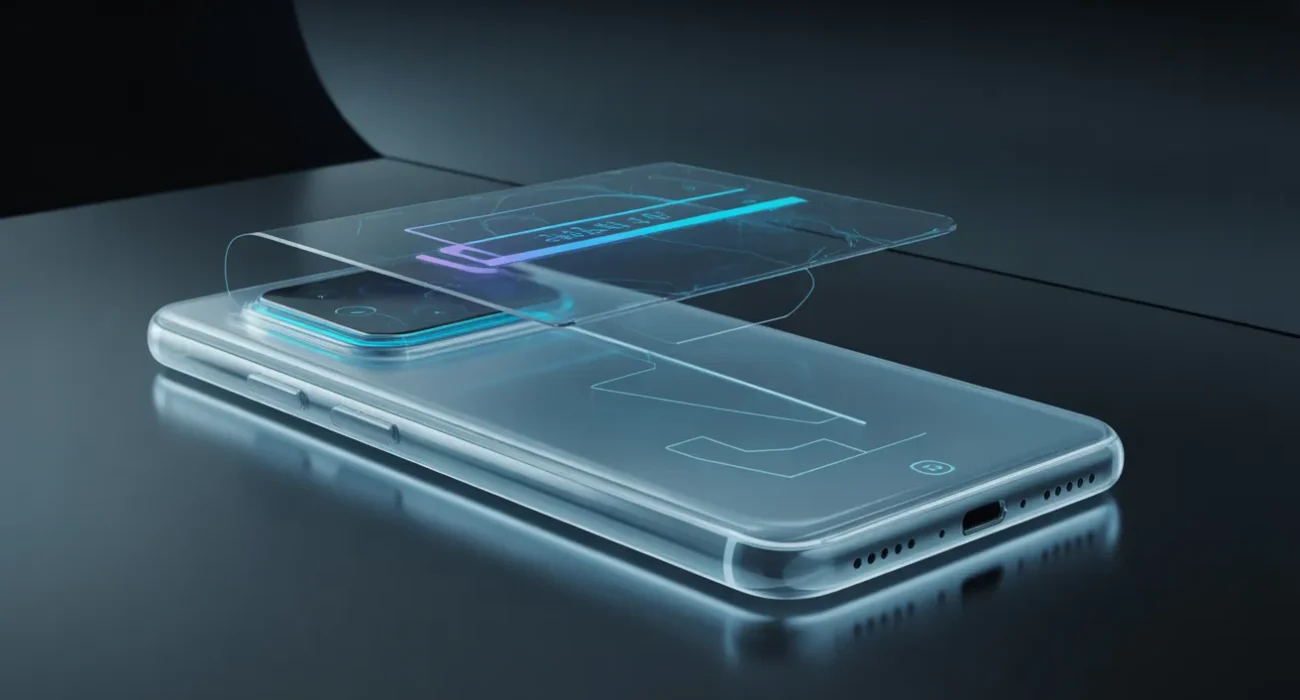
The modern smartphone is undergoing a quiet but radical mutation. For over a decade, our mobile experience has been entirely transactional: you open an app, tap a button, receive information, and close the app.
The newest artificial intelligence phones completely shatter this dynamic.
We are moving rapidly away from a screen full of individual app silos and entering the era of the agentic smartphone. The latest flagship devices aren’t just running AI tools; they are native AI platforms capable of local, multimodal reasoning. Instead of acting as an executive assistant that waits for your specific commands, a 2026 AI phone acts as an autonomous partner that understands your habits, manages multi-step workflows, and continuously interprets the physical world around you.
1. App-Free Interfaces and the Rise of “Agentic” Phones
The defining characteristic of a next-generation AI phone is the transition from static apps to autonomous AI agents. Rather than bouncing between three different applications to coordinate a dinner plan, you can issue a single complex prompt to your device:
“Book a table for four at a top-rated Italian place nearby for 7 PM Friday, send a calendar invite to Sarah and Dave, and message them a draft of the menu.”
In the past, legacy voice assistants would stumble on multi-step requests or offer a simple web search link. Today’s on-device large language models (LLMs) securely cross-reference your personal data, interact with web APIs, and execute these chains of actions across multiple applications entirely on their own.
This architectural shift is driving massive structural moves across the tech sector:
- Hardware-First AI Integration: Major chipmakers are redesigning silicon architectures to handle continuous background processing.
- The OpenAI Factor: Leaks and industry analyst reports confirm that OpenAI is actively exploring partnerships with Qualcomm and MediaTek to develop its own flagship “AI agent phone.” Targeting a premium launch window, the device is rumored to utilize a custom operating system that bypasses traditional app interfaces entirely in favor of an environment built from the ground up on persistent AI agents.
2. On-Device AI vs. Cloud AI: The Shift to Local Compute
The earliest consumer AI features relied heavily on cloud processing, sending your data to massive remote servers to be analyzed and sent back. The newest AI phones handle the vast majority of these heavy computations directly on the handset via specialized silicon called a Neural Processing Unit (NPU).
| Feature / Core Metric | On-Device AI | Cloud-Based AI |
| Data Privacy | High; personal data never leaves local storage | Variable; data transmitted to remote servers |
| Latency / Speed | Near-zero; immediate local execution | Network dependent; susceptible to lag |
| Connectivity | Works entirely offline (flights, remote areas) | Requires active internet connection |
| Processing Power | Constrained by mobile battery & NPU limits | Virtually unlimited server-side compute |
By keeping computing local, technologies like Apple Intelligence, Google Gemini, and Samsung Galaxy AI can transcribe multi-hour live audio recordings, analyze live video feeds, and rewrite complex documents instantaneously without eating up cellular data or exposing sensitive communications to data breaches.
3. Groundbreaking AI Features Standardized in 2026
If you are upgrading to a new artificial intelligence phone this year, you can expect an advanced suite of deep-tissue productivity and security tools right out of the box.
Contextual Visual Perception
Modern Image Signal Processors (ISPs) don’t just optimize lighting; they work with the NPU to grant your phone real-world “sight.” By pointing your camera at an object or activating an on-screen visual overlay, the AI can read complex environments, solve physical equations, identify structural flaws in machinery, or instantly extract and organize data from a dense text document.
Nuanced Real-Time Translation
Early translation apps offered stiff, word-for-word exchanges. Today’s AI phones feature real-time, two-way conversational translation directly inside voice calls. The hardware actively analyzes tonal inflection and regional idioms, delivering natural, fluid translations that eliminate language barriers during professional calls or international travel.
AI Deepfake & Fraud Detection
As synthetic media grows more advanced, next-gen mobile security has evolved to counter it. Premium devices now feature hardware-level, real-time deepfake detection. If you receive a video call or an audio message where the voice or facial geometry has been digitally manipulated, the phone’s security protocols analyze the metadata and rendering inconsistencies to alert you of potential fraud instantly.
4. The Top Premium AI Phones Available Now
If you want the absolute best AI performance on the market, three distinct flagship ecosystems lead the pack.
[Google Pixel 10 Pro] [Samsung Galaxy S26 Ultra]
– Tensor G5 Silicon – Snapdragon 8 Elite
– Multimodal Gemini Core – Advanced Scene Reconstruction
– Native Generative Video – ProScaler Local Editing
\ /
\ /
[The 2026 AI Flagship Market]
|
|
[Apple iPhone 17 Pro]
– A19 Pro Architecture
– Privacy-First Processing
– Deep-System Siri Agents
Google Pixel 10 Pro
Google treats artificial intelligence as its native operating language. Powered by the customized Tensor G5 chip, the Pixel 10 Pro excels at deep multimodal workflows. Its standout feature is native generative media editing: you can prompt the device to generate localized soundscapes, execute advanced multi-object video removal, and utilize “Magic Cue” to automatically parse and prioritize cross-app notifications so you never miss critical information.
Samsung Galaxy S26 Ultra
For power users and multitaskers, the Galaxy S26 Ultra leverages the raw performance of the Snapdragon 8 Elite processor. Samsung specializes in extreme computational photography and deep system optimization. Its ProScaler and scene reconstruction tools can upscale heavily compressed images into razor-sharp, studio-grade shots, while its background AI continuously monitors battery health and thermal output to adaptively manage system resources.
Apple iPhone 17 Pro Max
Apple’s approach prioritizes absolute security and seamless ecosystem integration. Anchored by the A19 Pro architecture, the iPhone 17 Pro Max processes sensitive personal data inside a localized secure enclave. Siri operates as a deeply integrated system agent capable of pulling information safely across your notes, emails, and messages to perform intricate scheduling and media tasks without ever compromising user privacy.
5. How to Choose Your Next AI Phone
If you are buying a new artificial intelligence phone, don’t just consider the number of megapixels or screen refresh rates. Rather, make your purchase based on these three principles of architecture:
- NPU TOPS Performance: TOPS (Trillion Operations Per Second) is a measurement of the speed of an AI chip. Be sure to check if the hardware has high NPU metrics as this will largely determine the speed of localized language models processing without lag.
- RAM Capacity: The amount of system bandwidth necessary for local AI is very large. Do not use a device with less than 12GB of RAM; flagships with 12GB to 16GB of LPDDR5X or LPDDR6 memory mean your on device agents operate smoothly in the background without freezing open apps.
- Ecosystem Openness: You need to choose between a closed, very private ecosystem, such as Apple’s iOS, and an open, highly integrative one, such as Google Android, which lets third-party AI agents to deeply modify and manage your user interface.
Frequently Asked Questions
Do older smartphones get these 2026 AI features through software updates?
Older devices often receive light, cloud-reliant software updates (like basic text summaries or object erasers). However, complex agentic features, real-time call translation, and local deepfake detection require advanced physical NPUs and high-speed RAM that older hardware architectures simply do not possess.
Does running on-device AI drain the phone’s battery significantly?
Although the handling of large language models requires a significant amount of resources, 2026 smartphone chips are built with specifically designed neural cores that are designed to mitigate this resource consumption. Plus, the integrated AI battery management system learns your habits, shuts off idle apps to ensure you have enough battery to last a full day.
How secure is my personal data with an AI phone?
Security is entirely based on whether the tasks are in the cloud or local in these new artificial intelligence phone. Apple, Google, and Samsung flagship devices focus on processing data on the device for critical operations such as biometric data, private communications, and local file searches. This data goes through a protected enclave that protects it from outside server attacks.